
Unlock Google Business Profile Engagement Secrets for Local SEO Success
A highly engaging Google Business Profile (GBP) turns local searchers into customers by increasing clicks, calls, and direction requests. This article explains what GBP engagement means, how engagement signals feed Local SEO, and practical steps you can take right away to maximize listing interactions. You will learn a checklist for profile optimization, proven review-generation workflows and reputation responses, what visual content moves the needle, how to use Google Posts to drive traffic, and advanced AI, voice-search, and local-link tactics relevant for 2025. Each section breaks down the mechanism, a short how-to, and examples tuned to local businesses and conversational search. By focusing on entity signals—categories, descriptions, photos, reviews, posts, and structured data—this guide helps you increase Google Business Profile engagement and translate visibility into measurable local traffic.
How Can You Optimize Your Google Business Profile for Maximum Local SEO Engagement?
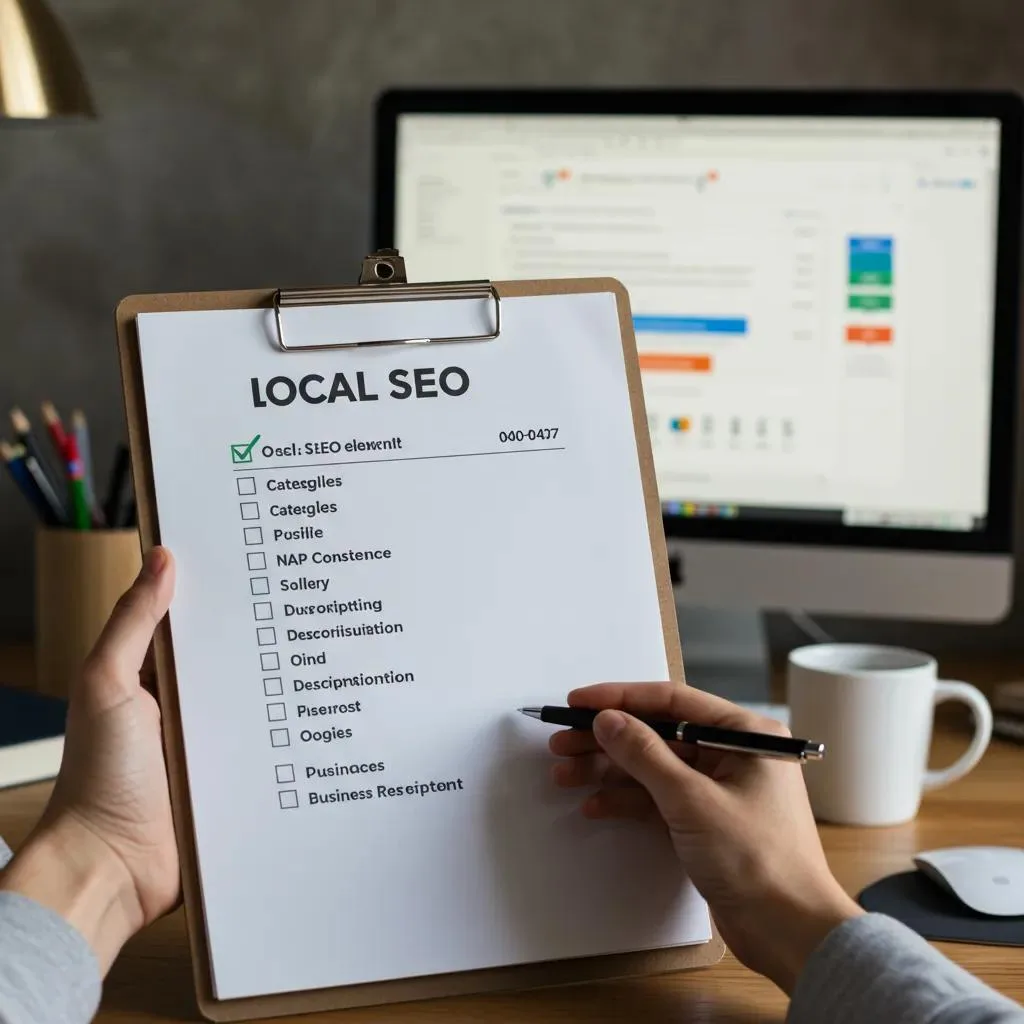
Optimizing a GBP means aligning the profile’s structured attributes with user intent and local relevance so Google and voice assistants surface your listing for relevant queries. Precise categories, a canonical NAP record, and a user-focused business description create relevance signals that improve map pack placement and click-through rates. Optimization also depends on filling services, attributes, products, and regular content updates; together these elements form the core on-page signals for local search engines. The following checklist summarizes core on-profile actions you should complete and maintain.
- Ensure the primary category is the most specific accurate label for your service.
- Complete services/products and attributes fields with concise, user-focused phrases.
- Maintain a canonical NAP and audit top directories quarterly.
This checklist creates a foundation that feeds into reputation tactics and visual content strategies covered next.
Which GMB Categories Should Local Businesses Choose for Better Relevance?
Choosing categories requires prioritizing specificity over broad terms so your listing matches niche queries and intent signals. Pick the single most precise primary category, then add secondary categories only to reflect actual services—not keywords. Validate category selection by querying Google Maps for competitors using your chosen primary category to confirm similar result types. Use category changes sparingly and document reasoning for each update to preserve historical performance and avoid confusion.
How Do You Ensure NAP Consistency Across All Online Platforms?
A canonical NAP record is the authoritative Name, Address, Phone combination you publish across directories and citations to avoid fragmentation of local signals. Start with a spreadsheet audit of high-value citations, prioritize corrections on major directories, and submit updates where discrepancies exist. Use automated citation management tools for monitoring, and record proof of changes to track propagation. Consistent NAP strengthens local trust and reduces conflicting signals that hinder GBP ranking.
Google Local Optimization: Strategies for Retailer Success and Traffic Growth
The Purpose of the presented research is to substantiate the importance of the local optimization of the retailer’s business for search engines to increase organic traffic; to represent insights and give practical recommendations for retailers regarding local optimization of their business in Google as part of an effective marketing strategy; to create the typical valid data micromarking (by the example of the Ukrainian retailer), which will contribute to an advantageous placement in the Local Pack in comparison with competitors, and increase organic traffic and conversion.
Business optimization in the digital age: Insights and recommendations, A Natorina, 2020
What Are Best Practices for Crafting a Keyword-Rich GMB Business Description?
A high-performing business description leads with primary service and location, naturally includes two to three related search phrases, and highlights benefits without keyword stuffing. Write a clear opening sentence: what you do, for whom, and where; follow with supporting capabilities and a brief differentiator. Avoid repeating the same keywords; instead use semantic variants and entity relationships to improve AI understanding. Finish with a short call-to-action aligned to your Google Posts and website landing pages.
What Are the Most Effective Strategies to Increase Google Business Profile Reviews and Reputation?
Earning more reviews requires systematic touchpoints, easy submission paths, and staff training to request reviews at moments of high satisfaction. Reviews signal local relevance and freshness; responding to reviews adds keyword context and demonstrates responsiveness to customers, which improves conversion rates. Reputation management also includes seeding helpful Q&A and using reviews as source material for Google Posts. Below are practical tactics to earn and manage reviews.
- Request reviews at peak satisfaction moments such as completed service or positive in-store interaction.
- Provide a short, direct instruction for reviewers and make the process frictionless.
- Train staff with scripts to ask for reviews and document follow-up workflows.
These steps create a predictable pipeline of user-generated content that improves both social proof and local ranking signals.
Intro to review-collection methods comparison:
| Method | Ease of Implementation | Expected Uplift in Reviews |
|---|---|---|
| Receipt follow-up (email/SMS) | Moderate | Medium-high |
| In-person ask by staff | Easy | High |
| Post-service automated reminder | Easy | Medium |
| QR code at point-of-sale | Very easy | Low-medium |
This table shows how combining in-person asks with follow-ups typically produces the highest uplift in reviews. After establishing collection workflows, invest time in response templates and Q&A seeding to maximize reputation value.
How Can Local Businesses Proactively Earn More Positive GMB Reviews?
Proactive review solicitation mixes timing, ease, and personalization to drive higher response rates. Ask within 24–72 hours after positive interactions, offer simple instructions or QR codes, and personalize requests to reference the service received. Monitor review velocity and rotate prompts across channels—email, SMS, and in-person—to reach diverse customers. Consistent, policy-compliant requests increase both volume and authenticity of reviews.
How Should You Respond to Positive and Negative Reviews to Boost SEO?
Responses should acknowledge specifics, reinforce local keywords naturally, and offer offline resolution for negatives; this signals engagement and freshness to Google. For positive reviews, thank the customer, mention the service, and note the neighborhood or locality; for negative reviews, empathize, propose a solution offline, and invite continued dialogue. Timely, professional replies help convert criticism into opportunities and add contextual phrases that assist search algorithms.
How Does Leveraging GMB Q&A Improve Local SEO Authority?
Q&A lets you pre-seed common customer queries in natural language, capturing voice-search phrasing and improving conversational match rates. Post authoritative answers to frequent questions, include short, helpful steps, and monitor for duplicate or inaccurate user answers. Use Q&A to target long-tail, question-style queries that voice assistants often surface, improving the chance your GBP answers will be read aloud or shown as a quick result.
After developing review workflows and response templates, consider a prioritized audit to surface quick wins. Whidbey Digital Marketing offers a Free Google Business Profile Audit that produces an action list focused on review solicitation and reputation improvements, helping local businesses prioritize tasks that drive measurable engagement.
How Do Photos and Videos Impact Google Business Profile Engagement and Local SEO?
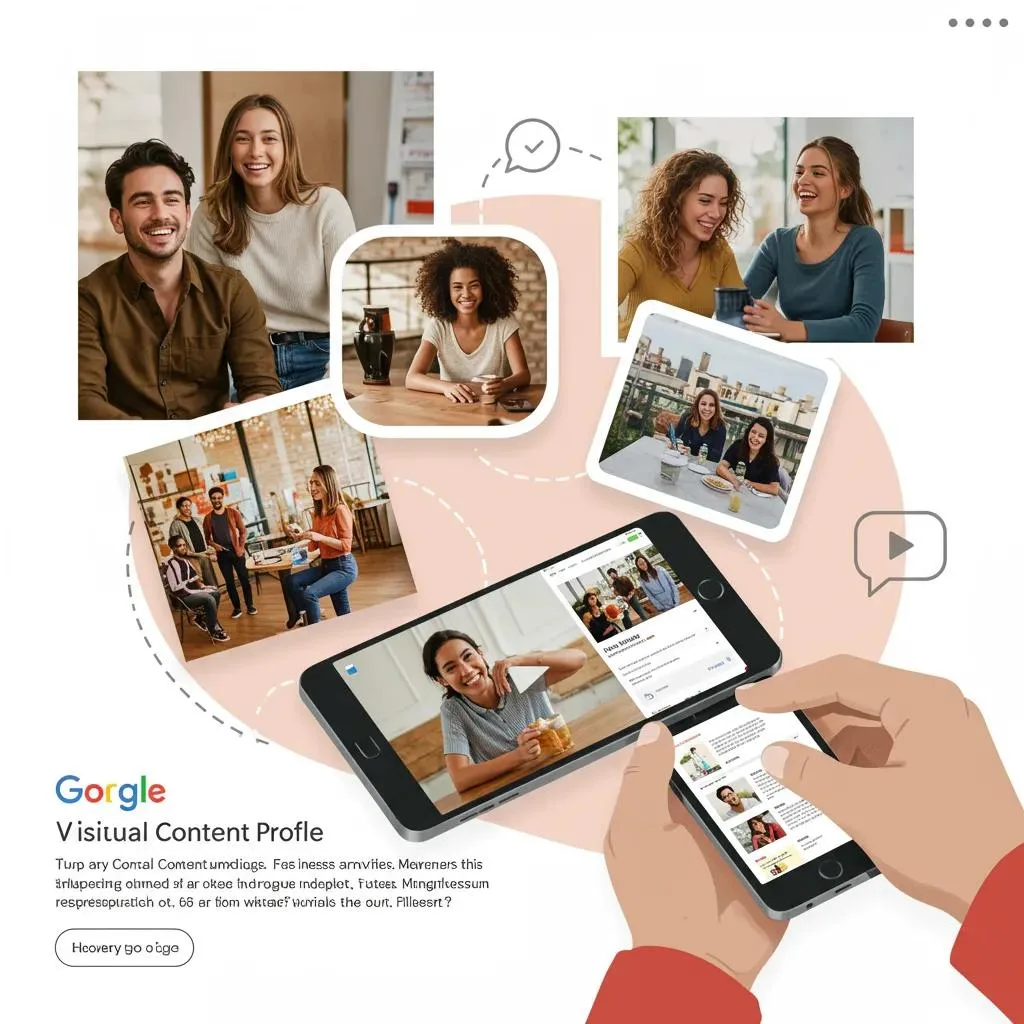
High-quality visuals increase clicks and trust while supplying semantic cues about your business; properly captioned images and ALT-like descriptions improve relevance for both maps and voice results. Visuals act as social proof and context signals—interior photos show accessibility, team photos humanize the brand, and product videos demonstrate service outcomes. The following table compares visual types, recommended specs, and expected engagement impact.
Intro to visual content comparison:
| Visual Type | Recommended Specs | Engagement Impact |
|---|---|---|
| Team photos | High-resolution, descriptive caption | Trust + conversions |
| Interior/exterior | Wide-angle, well-lit, location context | Direction clicks |
| Product/service shots | Close-up, action-in-use, short caption | Purchase intent |
| Short walkthrough videos | 10–30 seconds, clear narrative | Calls & clicks |
These comparisons highlight that a mixed visual strategy yields the best profile performance—use regular uploads and contextual captions tied to local keywords.
What Are Best Practices for Uploading High-Quality GMB Photos and Videos?
Use high-resolution images, name files with descriptive, local phrases before uploading, and include captions that describe the scene and service. Upload consistently to refresh the profile and remove outdated imagery. For videos, keep clips short, focus on single actions or tours, and ensure clear audio or captions for accessibility. Regular updates maintain freshness signals and encourage higher click-through.
Which Visual Content Types Drive the Most Customer Interaction?
Customer photos and team images often boost trust the most, while short service demos and before/after photos drive conversion by showing outcomes. Exterior photos help with navigation and directions clicks, whereas product shots answer purchase-intent queries. Prioritize content that matches common customer questions and include concise captions with local modifiers.
What Are Common Myths About Geotagging and Visual SEO on GMB?
Geotagging file metadata is less important than clear captions and filenames; manipulative geotagging can backfire. Focus on relevance and descriptive context instead of hidden EXIF edits. Accurate, user-focused captions and consistent image updates are practical visual SEO tactics that avoid risks associated with metadata manipulation.
How Can Google Posts and Regular Updates Boost Your GMB Visibility and Traffic?
Google Posts provide short-lived but measurable opportunity to drive clicks and conversions when they link to focused landing pages and match current intent. Posts act as freshness signals and can highlight offers, events, and product updates that attract immediate attention. A strategic cadence and clear CTAs make Posts a low-effort channel with measurable ROI; below is a recommended posting rhythm and KPIs.
- Post at least weekly with a mix of offers, events, and updates.
- Link posts to landing pages that mirror the post headline and CTA.
- Track views and clicks using GBP Insights and UTM parameters for website analytics.
This cadence sustains freshness and connects profile visitors to conversion-focused pages.
Intro to post-type examples:
| Post Type | CTA Example | Linking Best Practice |
|---|---|---|
| Offer | “Redeem 10% off — Book now” | Link to dedicated offer page |
| Event | “Register for workshop” | Link to event landing page |
| Update | “New service announcement” | Link to service page with local schema |
Using tailored landing pages ensures semantic alignment between posts and on-site content, improving conversion and measurement.
What Is a Consistent Google Posts Strategy for Local Businesses?
A consistent strategy mixes weekly offers, biweekly updates, and event posts for seasonal peaks. Align post copy with landing page headlines, use UTM tags for tracking, and review GBP Insights weekly to refine topics. Maintain a content calendar and repurpose high-performing posts across channels for efficiency and testing.
What Types of Google Posts Generate the Most Engagement?
Offers and events typically generate the most direct clicks because they promise immediate value, while product spotlights and timely local updates increase site visits. Use concise headlines, a single CTA, and an image to increase visibility. Test variations and double down on formats that produce the best view-to-click ratio.
How Do You Link Google Posts to Your Website to Increase Traffic?
Match the post headline to the landing page headline, include a succinct CTA, and use UTM parameters for GA4 measurement. Landing pages should include local trust signals such as reviews, service descriptions, and schema markup aligned with the GBP. This semantic consistency improves both analytics accuracy and conversion rates.
What Advanced Techniques Use AI, Voice Search, and Local Links to Enhance GMB Ranking in 2025?
AI and automation accelerate post generation, review-response drafting, and keyword discovery while voice-search optimization and local linking strengthen conversational and authority signals. Use AI to propose post variants, then apply a human edit for local nuance; validate suggested keywords against user query data. Local links from event pages, sponsorships, and community directories provide topical authority and referral traffic that reinforce GBP relevance.
- Use AI to draft post copy and review response templates, then verify for accuracy.
- Target question-style, conversational phrases in Q&A and descriptions for voice search.
- Build local backlinks via partnerships, local sponsorships, and community resource pages.
These tactics combine automation with human review to scale quality while preserving local context.
How Can AI Tools Streamline Google Business Profile Optimization?
AI can generate multiple post candidates, draft response templates, and surface long-tail, conversational keyword suggestions quickly. Workflows should include tool-generated drafts, human-localization edits, and performance testing. This hybrid approach increases throughput while controlling for factual and local accuracy.
How Do You Optimize Your GMB for Voice Search and Conversational Queries?
Seed question-style phrases into your business description, Q&A, and posts; focus on natural language queries like “Where can I find X near me?” and “Who offers Y in [town]?”. Add structured data to linked pages and monitor voice query trends to refine terms. Capturing common voice phrases in answers increases the chance your profile is surfaced for spoken queries.
What Are Effective Local Link Building Strategies to Improve GMB Ranking?
Prioritize links from locally relevant sources such as event pages, chamber directories, and community blogs. Create linkable assets like local guides or anonymized case studies that attract citations. Track referring domains and referral traffic to measure impact and focus outreach on high-relevance targets.
Advanced optimization often benefits from an external audit to identify quick wins in AI, voice, and local links. Whidbey Digital Marketing’s data-driven approach with Oak Harbor experience can help prioritize those gains through a Free Google Business Profile Audit that highlights immediate actions.
Whidbey Digital Marketing provides a Free Google Business Profile Audit that delivers a prioritized action plan to increase GBP engagement and drive more organic local traffic — a practical next step for businesses ready to convert visibility into measurable results.