

Local SEO Solutions for Small Businesses: Optimizing Online Visibility
Local SEO focuses on improving visibility for searches that include a place, a neighborhood, or the phrase “near me,” helping businesses capture customers ready to visit or call. This article explains how nearby agencies act on Google Business Profile optimization, local citations, online review management, technical fixes, voice search readiness, and hyperlocal content to deliver measurable increases in local visibility and conversions. Small businesses frequently lose customers because their listings are incomplete or inconsistent across directories; local SEO fixes those signals to drive local discovery and customer actions. You will learn which agency actions matter most, practical checklists you can apply immediately, and how advanced trends like AI Overviews and voice search change prioritization in 2025. The sections below cover agency deliverables, prioritized strategies for 2025, review and reputation playbooks, citation and link-building priorities, and the technical foundations you must lock in to win local pack placement.
How Can a Local SEO Agency Near Me Improve Your Local SEO Ranking?
A local SEO agency improves ranking by auditing and optimizing the location-based signals search engines use to rank nearby businesses: Google Business Profile completeness, NAP consistency, reviews, local content, and technical page signals. Agencies implement targeted local keyword research and on-page signals that align queries with business services, while citation audits and link-building increase perceived authority for neighborhood-level queries. The practical benefit is measurable: more visibility in the local pack, increased direction requests, and higher call-through rates. Below are the primary agency actions that produce those outcomes and are ideal for featured-snippet style presentation.
Local SEO agencies commonly perform the following actions:
- Google Business Profile optimization: Complete profiles, correct categories, add photos and products, and use posts to increase engagement.
- Citation audits and NAP correction: Identify inconsistent listings, correct them, and improve map accuracy.
- Review management and response: Solicit reviews ethically, respond promptly, and monitor sentiment to improve CTR.
- Technical and on-page fixes: Mobile optimization, Core Web Vitals improvements, and schema markup to support entity clarity.
These agency actions form a coordinated process: optimize listings first, then fix technical issues while driving citations and reviews to sustain higher local rankings.
What Local SEO Services Do Nearby Agencies Offer?
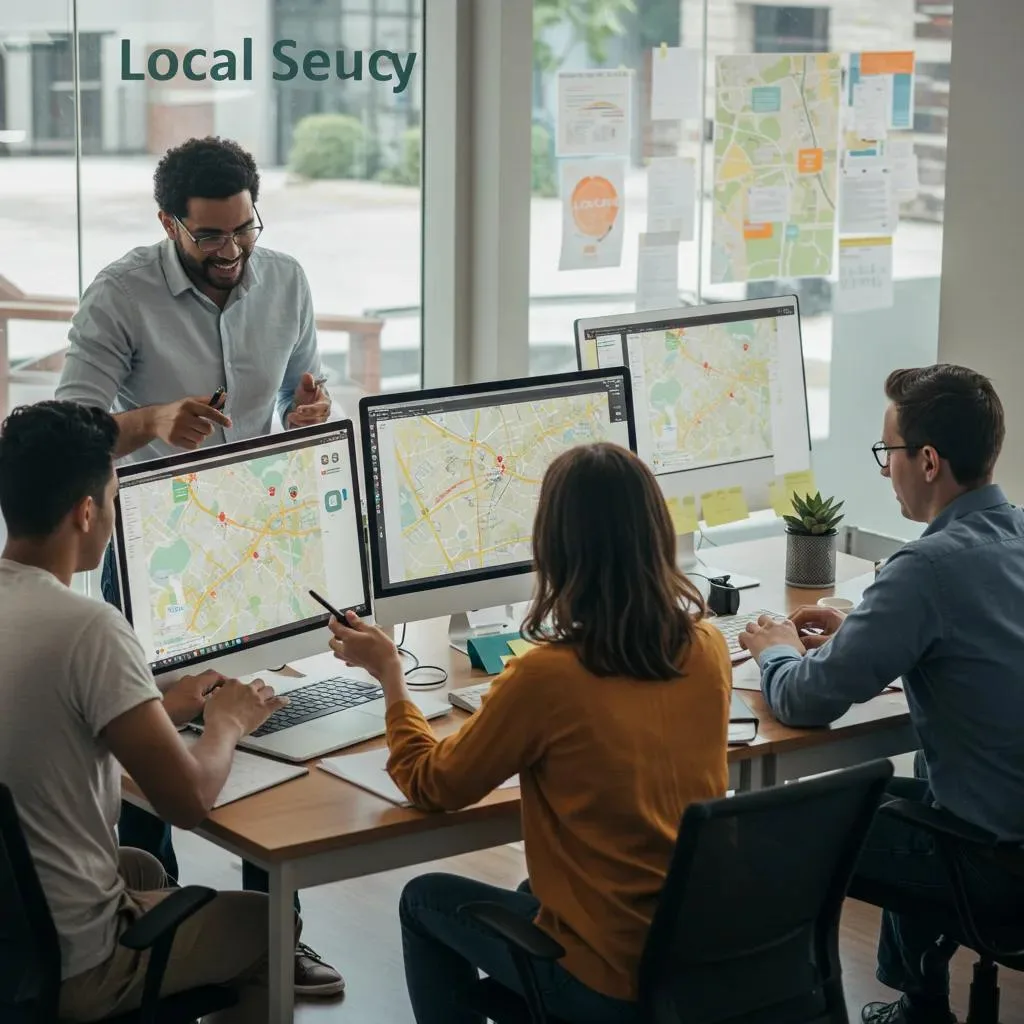
Nearby agencies offer a standard suite of local services focused on discovery and conversion. They typically combine listing management, local keyword targeting, on-page optimization, citation building, review management, local link outreach, and performance tracking into monthly or project-based programs designed to move local ranking signals. Agencies measure progress with KPIs like local pack impressions, GBP calls and direction requests, citation corrections completed, and review volume growth. This makes it straightforward for small business owners to prioritize tasks that deliver near-term visibility gains and plan longer-term content and authority campaigns.
Agencies present services as discrete deliverables that map to outcomes:
| Service | Attribute | KPI / Typical Timeframe |
|---|---|---|
| GBP optimization | Profile completeness & categories | Increase in search and map views within 4–8 weeks |
| Citation audit & corrections | NAP consistency | Fewer map ranking errors; corrections in 2–6 weeks |
| Review management | Solicitation & response workflow | +20–40% review growth over 3 months |
| Technical fixes | Mobile speed & schema | Improvements in Core Web Vitals within 2–8 weeks |
This table helps compare services by expected impact and timeframe, enabling data-driven decisions about where to invest first.
How Do Local SEO Agencies Optimize Google Business Profiles?
Agencies optimize Google Business Profiles (GBP) using a checklist that targets completeness, accuracy, and engagement signals. They ensure every field is filled, select precise categories, add consistent NAP, upload high-quality images, craft keyword-aware descriptions, and publish regular posts and offers to signal activity. Monitoring GBP insights (search views, direct searches, calls, direction requests) informs iterative changes and content experiments to improve performance. Tracking these metrics and refining attributes over time increases relevance for “near me” searches and supports higher placement in the local pack.
Agencies also set up attribution and reporting so owners can see which GBP updates correlate with increases in calls or visits, creating a closed-loop improvement process that guides subsequent optimization.
What Are the Most Effective Local SEO Strategies for 2025?
Effective local SEO in 2025 prioritizes authoritative, structured listings and content that addresses AI-driven summaries and conversational search. Core priorities remain Google Business Profile completeness, review quality and volume, mobile-first performance, and page speed, but new emphasis falls on structured data for entity clarity and content designed for AI Overviews and voice search. Preparing content as concise answers with clear entity relationships improves the chance of being surfaced by generative search features. Below are prioritized strategies to implement now.
Key 2025 strategies include:
- Complete and optimize GBP: Ensure every attribute and service is specified to feed AI entity models.
- Focus on review velocity and quality: Systematically solicit reviews and respond to increase trust signals.
- Optimize for mobile and Core Web Vitals: Fast, stable pages convert more local visitors.
- Prepare content for AI and voice: Concise answers, FAQ schema, and conversational phrases capture new SERP features.
These priorities should be sequenced: listings and reviews first, technical fixes next, then AI/voice and hyperlocal content to capture emerging opportunities.
How Does Voice Search Impact Local SEO Success?

Voice search shifts queries from terse keywords to conversational questions, increasing the importance of natural-language content and FAQ-style pages. For local businesses, voice queries often contain transactional intent combined with locality, for example “nearest coffee shop open now” or “plumber near me with good reviews,” so content should mirror these phrasings. Implementing FAQ schema, concise answer blocks, and natural-language headings improves chances for voice-enabled assistants to select and read your content. Testing and tracking voice-intent queries in search analytics helps refine which conversational phrases to prioritize.
Adapting on-page copy and metadata for real speech patterns produces higher relevance for hands-free searchers and aligns content with AI-driven answer surfaces.
What Role Does AI Play in Modern Local SEO?
AI Overviews and generative features aggregate concise facts about entities; structured data and clear entity relationships improve the likelihood your business is summarized accurately. Use LocalBusiness schema, service markup, and structured FAQ responses to make entity attributes explicit to AI systems. Concise, authoritative content that answers common local queries increases the chance of being cited in AI responses, while regular updates maintain relevancy. Monitoring how AI features reference your listings informs content tweaks that prioritize entity clarity and factual accuracy.
In short: structured data + concise authoritative answers = higher chance of being surfaced by AI summaries and driving referral traffic.
How Can Hyperlocal Targeting Boost Nearby Business Visibility?
Hyperlocal targeting focuses on neighborhoods, landmarks, and micro-areas within your service region to capture highly relevant searchers. Create neighborhood landing pages, optimize content with geo-modifiers, and claim local directory entries specific to community organizations or chambers to increase local relevance. Use internal linking and schema to connect neighborhood pages back to your primary location entity, improving mapping signals. Hyperlocal campaigns paired with local link-building (sponsorships, event pages) convert nearby searchers into visits more effectively than broad regional pages.
This granular approach builds layered relevance: neighborhood content boosts local queries while citations and backlinks supply the authority needed to rank.
Why Is Managing Online Reviews Crucial for Local SEO Success?
Online reviews serve as both a ranking signal and a conversion multiplier: higher ratings and recent reviews increase local pack placement and lift click-through and call rates. Reviews feed relevance and authority signals to search engines while shaping user trust before a single click. Effective review management includes ethical solicitation, response workflows, and reputation monitoring to ensure issues are resolved offline when possible. The next section explains how reviews influence rankings and provides practical templates to encourage and reply to feedback.
How Do Online Reviews Influence Local Search Rankings?
Reviews influence local rankings by contributing to perceived authority, recency signals, and click-through behavior; search engines use these signals to assess trust and relevance for local queries. High ratings and frequent recent reviews correlate with better local pack performance and higher CTRs in SERPs, leading to more calls and direction requests. User behavior after exposure to reviews, such as clicking the listing or calling, feeds back into ranking algorithms as engagement signals. Recent studies and industry tracking in 2025 highlight that review velocity and rating distribution materially affect visibility in competitive local markets.
Understanding this mechanism clarifies why systematic review programs are a priority for local SEO.
What Are Best Practices for Encouraging and Responding to Reviews?
Encouraging reviews ethically requires timely asks, simple processes, and multiple channels (email, SMS, receipts) while avoiding incentivization that violates platform policies. Respond promptly to both positive and negative feedback: thank positive reviewers and offer to resolve negative experiences offline with a clear process to follow up. Track templates and response times to ensure consistency and use responses to surface solutions and additional local keywords when appropriate. Documenting and analyzing review content reveals service gaps and marketing opportunities that further improve conversion rates.
These practices create a reproducible loop: solicit → respond → resolve → learn, which sustains review-driven discovery.
How Can Agencies Help Build a Strong Online Reputation?
Agencies help by establishing review solicitation workflows, monitoring platforms for new feedback, responding quickly on behalf of the business, and reporting on review-driven conversions. They set up attribution so owners can see which review efforts produce calls or bookings and run A/B experiments on messaging and timing to improve conversion. Agencies may also integrate reputation monitoring tools to catch emerging issues before they affect ratings widely. Implementing these processes turns reviews into a measurable growth channel rather than an unpredictable risk.
| Review Platform | Visibility Impact | Ease of Solicitation | Recommended Response Strategy |
|---|---|---|---|
| Major search listings | High | Moderate | Respond quickly; note resolution steps |
| Local directories | Medium | Easy | Acknowledge and add local detail |
| Industry-specific sites | High (niche) | Variable | Personalize responses; address specifics |
For local businesses on Whidbey Island, agencies near you can operationalize these review workflows to drive measurable results and align with the objective of More organic traffic to site while preserving authentic customer communication.
How Do Local Citations and Link Building Enhance Local SEO Authority?
Citations are mentions of a business’s NAP across directories and platforms; consistent citations improve mapping accuracy and trust signals. Local link building—sponsorships, partnerships, local press, and community pages—adds domain authority and context signals that lift rankings for neighborhood queries. Prioritizing citation sources by authority and relevance prevents wasted effort on low-value directories and ensures that local linking supports the entity signals search engines use. The following table guides citation prioritization and tactical choices for small businesses.
What Are Local Citations and Why Are They Important?
Local citations are structured or unstructured mentions of a business’s name, address, and phone number across the web, including directories, chamber listings, and local news. They serve as corroborating evidence for NAP data and improve discoverability in local searches and mapping services. High-quality citations from authoritative local directories and community sites have more positive impact on mapping and local pack ranking than random low-quality listings. Maintaining consistent citations reduces confusion in mapping algorithms and improves the reliability of local search signals.
Consistent citation work supports subsequent link-building and reputation efforts by stabilizing the foundational facts about a business.
How Can Consistent NAP Information Improve Local SEO?
Consistent NAP reduces mapping errors and improves the chances that search engines correctly associate a business with a place and category. Conduct an audit: compile all known listings, compare NAP variants, prioritize corrections on high-authority directories, and log changes for verification. Use a simple checklist to manage the process and re-check listings periodically, especially after any address or phone changes. This reduces ranking volatility and improves performance in the local pack.
A disciplined correction workflow converts citation maintenance from a one-time task into an ongoing trust-building activity.
Local SEO Optimization for Retailers: Increasing Organic Traffic and Conversions
The Purpose of the presented research is to substantiate the importance of the local optimization of the retailer’s business for search engines to increase organic traffic; to represent insights and give practical recommendations for retailers regarding local optimization of their business in Google as part of an effective marketing strategy; to create the typical valid data micromarking (by the example of the Ukrainian retailer), which will contribute to an advantageous placement in the Local Pack in comparison with competitors, and increase organic traffic and conversion.
Business optimization in the digital age: Insights and recommendations, A Natorina, 2020
What Are Effective Local Link Building Techniques?
Local link building focuses on relevance and community ties: sponsorships, local news coverage, partnerships with complementary businesses, and content that serves community interests. Create linkable local assets such as event pages, original neighborhood guides, or data-driven local reports and promote them to local media and organizations. Prioritize outreach by relevance and authority, focusing first on municipal, chamber, and reputable local news portals. These links reinforce the business’s local entity profile and amplify the impact of citations and GBP signals.
| Directory / Source | Authority | Ease of Submission | NAP Consistency Impact |
|---|---|---|---|
| Chamber / local gov | High | Moderate | High |
| Local news sites | High | Variable | High |
| National directories | Medium | Easy | Medium |
| Niche industry sites | Medium | Moderate | Medium |
The table helps prioritize high-impact citation and link targets that support neighborhood-level visibility.
How Do Technical SEO Foundations Support Local SEO Success?
Technical SEO ensures that the site can be crawled, indexed, and served quickly to mobile users making local queries, which directly affects local rankings and conversions. Mobile-first design, fast Core Web Vitals, and LocalBusiness schema are foundational elements that support higher visibility and better user experience for nearby searchers. Addressing technical issues reduces friction for visitors who want to call, get directions, or book appointments, converting search visibility into measurable customer actions. The final paragraph below provides a brief CTA for businesses seeking a local audit to improve these technical foundations.
Why Is Mobile Optimization Vital for Local SEO?
Mobile optimization aligns with mobile-first indexing and the reality that most local searches start on phones with high intent to act. Responsive design, clear click-to-call buttons, map embeds, and fast interactive pages reduce friction for users seeking directions or booking services. Ensuring forms and buttons are large and accessible improves conversion from local traffic, while testing real-device performance reveals practical UX issues to fix. Mobile readiness therefore converts local interest into business outcomes more effectively than desktop-focused sites.
Optimizing mobile UX sets the stage for speed and schema improvements that follow.
How Does Website Speed Affect Local Search Performance?
Website speed affects both ranking signals and user behavior: slow pages increase bounce rates and reduce conversions from local queries. Core Web Vitals (Largest Contentful Paint, First Input Delay, Cumulative Layout Shift) supply measurable targets for improvement. Quick wins include compressing images, leveraging browser caching, using a CDN for regional delivery, and minimizing render-blocking JavaScript and CSS. These technical optimizations improve perceived quality and support higher conversion rates for mobile local users.
Faster pages not only rank better but also sustain more calls and bookings from local searchers.
What Schema Markup Should Local Businesses Implement?
Local businesses should implement LocalBusiness schema, Service schema for individual offerings, Review and AggregateRating schema to surface review data, and FAQPage schema for conversational answers that feed voice and AI features. Use JSON-LD in the page head, keep entity attributes explicit (address, opening hours if applicable, serviceArea), and validate with standard rich result tools to ensure markup is parsed. Structured data clarifies entity relationships and increases the chance that AI Overviews and rich snippets use your content for concise answers.
Structured data is the bridge between your content and AI-driven features that amplify local visibility.
For a practical next step to lock down these technical foundations and pursue More organic traffic to site, request a localized SEO audit or consultation tailored to Whidbey Island and Oak Harbor businesses — a concise audit can reveal the highest-impact fixes to improve local discovery and conversions.