

Supercharge Your Local SEO: Essential Tactics for Small Businesses
Local SEO is the practice of optimizing your online presence so nearby customers find and choose your business, and when done right it increases organic traffic, calls, and walk-ins. This guide shows small-business owners concrete tactics—from Google Business Profile (GBP) optimization to local keyword strategy, reviews management, and citation consistency—that drive measurable local visibility. Many small businesses struggle because their profiles are incomplete, keywords are too generic, or citation data conflicts; this article fixes those problems with step-by-step actions and practical examples. You’ll get checklist-style instructions for claiming and optimizing GBP, a compact keyword-playbook for “near me” intent, review-generation and response templates, and a citation audit workflow to protect map-pack rankings. Each section includes short tables and actionable lists designed to trigger featured snippets and make implementation straightforward.
How Can You Optimize Your Google Business Profile for Local SEO Success?
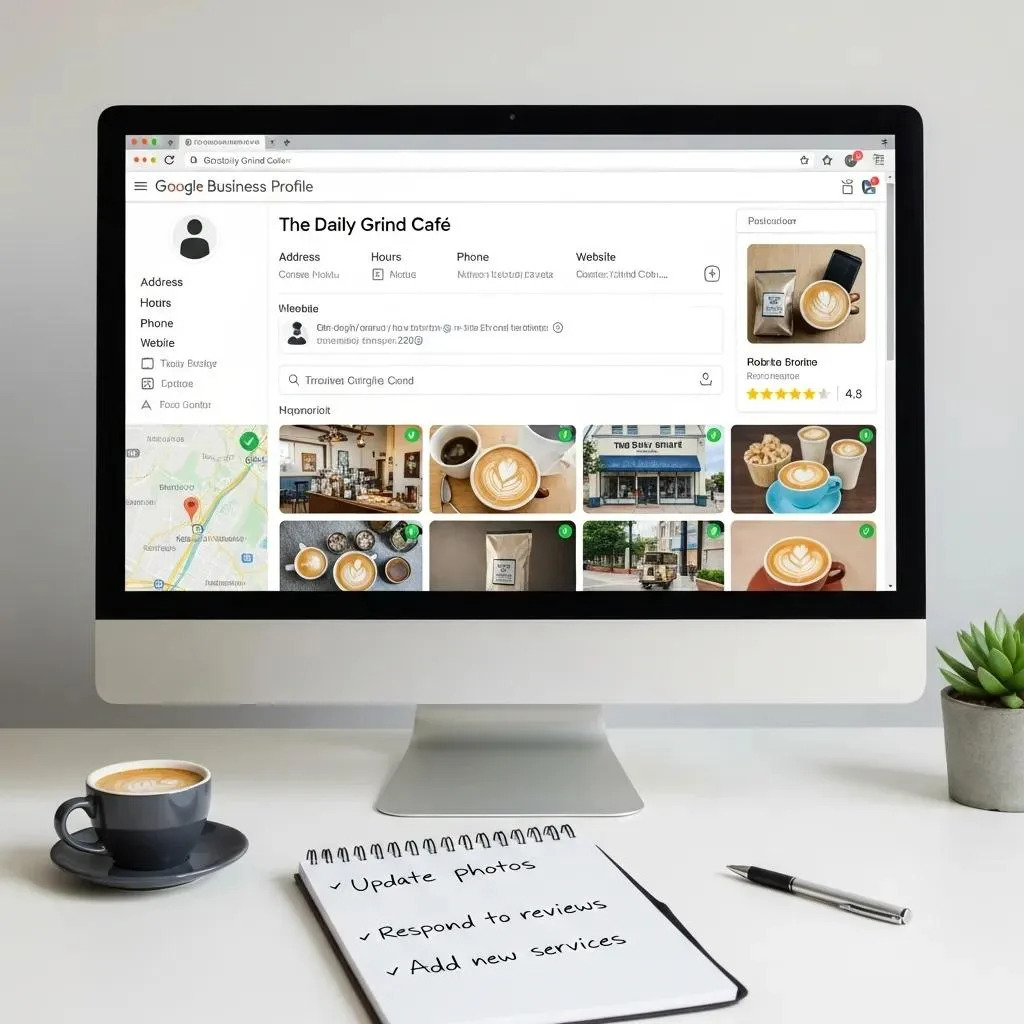
A fully optimized Google Business Profile increases local relevance and user actions by supplying search engines with structured signals about your business, and this clarity converts searches into calls and visits. Start by ensuring your primary category, services, and attributes precisely match offerings so Google can associate your listing with relevant queries. Complete core fields immediately and use multimedia and posts to sustain engagement, which improves CTR and local ranking over time. The next paragraphs break those tasks into claim/verify steps and media/post tactics you can apply today.
What to do first: claim, verify, and complete your profile quickly so Google recognizes your ownership and can show accurate info to searchers. Verification establishes authority and typically takes minutes to a few weeks depending on method, and completion of fields (categories, services, hours) signals relevance for local queries. After verification, prioritize categories and service descriptions to align with target local keywords. This setup leads naturally into ongoing content and media strategies that keep your GBP fresh.
Essential GBP sections and recommended practices:
| GBP Section | Best Practice | Example/Value |
|---|---|---|
| Primary Category | Choose the most specific category | Use one primary + 2-3 secondary service categories |
| Services | Add concise service names and descriptions | 10–25 words per service, keyword-rich but natural |
| Photos | Upload diverse, recent photos | 720×720 px recommended; add new photos weekly |
| Posts | Use short offers and event posts | 150–300 characters with a clear call to action |
This table shows which GBP fields most influence discovery and action; completing them creates coherent entity signals that support local ranking.
What Are the Essential Steps to Claim and Verify Your Google Business Profile?
Claiming and verifying a GBP creates ownership and enables edits that improve local relevance, and verification methods vary by listing status and category. The typical workflow is: locate the correct listing or create one, choose the verification method Google offers, and then complete core fields immediately after verification. Expect postcard verification to take around 5–14 days, while phone or email checks can be instant; if verification stalls, follow Google’s support prompts and re-check ownership options. Proper verification lets you manage reviews, add services, and publish posts—actions that shape the GBP signals used by local search.
After verification, prioritize filling the primary category, services, and business description so the profile communicates exact offerings and target keywords. Completing these fields is the foundation for ongoing optimization and content strategies discussed next.
How Do You Use Photos, Posts, and Q&A to Boost Your Local Visibility?
Multimedia and interactive GBP features increase click-through rates and demonstrate activity signals to search engines, and consistent updates maintain trust with prospective customers. Post new photos regularly—product shots, team images, and location exterior—so your listing looks current and engaging; aim for at least one new photo per week and a mix of image types. Use GBP posts to announce offers, events, or service changes with clear calls to action and short, benefit-focused copy; posts that reference local keywords help reinforce relevance. Monitor Q&A and seed common questions with concise answers, then pin authoritative responses to shape how customers perceive your services and to preempt low-quality user answers.
Keeping visual and interactive content fresh builds user trust and creates reasons for users to choose your business over competitors.
Research indicates that optimizing Google Business Profile is crucial for increasing organic traffic and conversions, especially for retailers.
Local SEO Optimization for Retailers: Increasing Organic Traffic and Conversions
The Purpose of the presented research is to substantiate the importance of the local optimization of the retailer’s business for search engines to increase organic traffic; to represent insights and give practical recommendations for retailers regarding local optimization of their business in Google as part of an effective marketing strategy; to create the typical valid data micromarking (by the example of the Ukrainian retailer), which will contribute to an advantageous placement in the Local Pack in comparison with competitors, and increase organic traffic and conversion.
Business optimization in the digital age: Insights and recommendations, A Natorina, 2020
What Local Keyword Strategies Help Small Businesses Reach Nearby Customers?

Local keyword strategy focuses on matching searcher intent with location signals so pages rank for nearby queries, and this involves research, modifiers, and mapping keywords to specific landing pages. Start with seed terms for services, append geo-modifiers (city, neighborhood), and include “near me” patterns where appropriate, then prioritize by search intent and conversion likelihood. Implement keywords into titles, meta descriptions, headings, and LocalBusiness schema to send clear signals to search engines. The next subsection covers tools and mapping approaches to create a focused keyword plan for local pages.
Quick comparison of keyword types and how to use them:
| Keyword Type | Example | Implementation Tip |
|---|---|---|
| Commercial | plumber near Oak Harbor | Use on service landing pages and title tags |
| Informational | how to fix leaking faucet | Use in blog posts to capture discovery intent |
| Long-tail | emergency plumbing services Oak Harbor WA | Target with dedicated local landing pages |
| Near-me | coffee shop near me | Use GBP signals and location pages, avoid stuffing |
How Do You Find and Use Local Keywords for Small Business SEO?
Use a mix of free and paid tools to discover local keywords, combining Google Autocomplete, related searches, and competitive analysis to surface high-intent phrases. Create a keyword map that assigns each target phrase to a specific page—service pages for commercial terms, blog posts for informational queries—and include geo-modifiers naturally in titles and headings. Track search volume and estimated difficulty to prioritize quick wins, then produce content optimized for conversion. Mapping keywords to pages reduces cannibalization and helps local search engines associate queries with the best-fit page.
Once keywords are mapped, on-page optimization and schema integration make those pages visible to local searchers.
What Are Effective On-Page Techniques for Local Keyword Implementation?
Signal local relevance on-page by including city or neighborhood modifiers in the title tag, meta description, H1, and opening paragraph where it reads naturally, and by embedding a local map and NAP details on contact pages. Add LocalBusiness schema and service schema to provide structured data that search engines parse easily, and ensure mobile-friendly design and fast loading to improve user experience. Consistent internal linking from blog posts to local landing pages distributes relevance and helps users find location-specific services quickly.
These on-page steps complete the keyword-to-page loop and prepare pages to rank in local packs and organic results.
Training micro-businesses on SEO and Google My Business can significantly expand their online reach and visibility.
SEO and Google My Business Training for Micro-Businesses to Expand Online Reach
Pengabdian kepada masyarakat ini bertujuan untuk meningkatkan kapasitas pelaku usaha mikro dalam memanfaatkan strategi Search Engine Optimization (SEO) dan Google My Business (GMB) guna memperluas jangkauan promosi usaha secara online. Kegiatan pelatihan ini dilaksanakan di salah satu desa tertinggal di wilayah Kabupaten Solok Selatan, yang mayoritas masyarakatnya bergantung pada usaha kecil dan menengah berskala rumah tangga. Metode pelaksanaan terdiri atas pendekatan partisipatif melalui pemetaan kebutuhan, pelatihan teori dan praktik, serta pendampingan intensif. Materi pelatihan mencakup konsep dasar SEO, optimasi konten digital agar mudah ditemukan di mesin pencari, serta cara mendaftar dan memaksimalkan fitur Google My Business untuk menampilkan profil usaha di Google Search dan Maps.
Pelatihan Strategi Search Engine Optimization (SEO) Dan Google My Business Untuk Pelaku Usaha Mikro Di Daerah Tertinggal, 2025
How Do Online Reviews Build Trust and Improve Local Search Rankings?
Online reviews supply social proof and signal business quality; search engines interpret higher quantity and recent positive reviews as stronger trust signals, which can improve local visibility and click-through rates. Reviews affect both ranking algorithms and user conversion decisions: higher-rated businesses receive more clicks and calls. Ethical review solicitation and timely responses are essential to building a healthy review profile that supports long-term local visibility. Below are actionable best practices and response strategies to implement.
Best practices list for generating reviews:
- Request at the right moment: Ask shortly after a positive service experience while the interaction is fresh.
- Make it easy: Provide direct instructions and short templates for customers to follow.
- Diversify channels: Encourage reviews across GBP and major review platforms relevant to your industry.
Following these tactics increases review volume and quality, which in turn helps search visibility and customer trust.
What Are Best Practices for Generating Positive Local Reviews?
Solicit reviews through post-service emails, receipts, and SMS prompts that include a clear, one-step instruction for where and how to leave feedback, and encourage details about the specific service to increase helpfulness. Train staff to request reviews at natural touchpoints and provide short templates to reduce friction. Avoid offering incentives for reviews; instead, emphasize the value of honest feedback and make the process quick so customers are more likely to respond.
Well-structured solicitations improve conversion from happy customers into visible social proof.
How Should Small Businesses Respond to Positive and Negative Reviews?
Respond to positive reviews with personalized appreciation that references the service provided, and to negative reviews with empathy, an acknowledgment of the issue, and an invitation to continue resolution privately. Use a calm, corrective tone that demonstrates responsiveness and a commitment to customer satisfaction; public responses that offer a clear next step often reassure potential customers. Track response times and aim to reply to all reviews promptly to show consistent attention to customer feedback.
Thoughtful responses convert reviews into trust-building content and can mitigate the impact of negative feedback.
Why Are Local Citations and NAP Consistency Critical for Small Business SEO?
Local citations—mentions of your business name, address, and phone across directories—help search engines corroborate your business entity and precision of location data, and consistent NAP signals reduce ambiguity that can harm map-pack rankings. An audit to find and fix inconsistent citations protects local authority, and prioritizing high-value directories yields the biggest ranking impact. The following table lists major directories and required fields to help you plan a cleanup and build workflow.
| Directory | Required NAP Fields | Notes/Action |
|---|---|---|
| Google Business Profile | Name, Phone, Address, Category | Ensure exact NAP formatting; sync with GBP |
| Name, Phone, Address, Website | Claim page and maintain consistent NAP | |
| Yelp | Name, Phone, Address, Hours | Monitor user edits and claim listings |
| Bing Places | Name, Phone, Address, Category | Keep synchronized with GBP information |
How Do You Identify and Build Local Citations Across Key Directories?
Perform a citation inventory using both automated tools and manual searches to list current mentions, then normalize your NAP format and update or claim listings on high-priority directories first. Maintain a spreadsheet of entries, claim unverified listings, and standardize naming conventions—abbreviations, suite numbers, and phone formatting must match across entries. Regularly recheck high-impact directories and set reminders to monitor changes that third parties may introduce.
A steady citation management routine prevents drift and preserves local search authority.
What Is NAP Consistency and How Does It Affect Local Search Rankings?
NAP consistency means your business name, address, and phone number appear identically across all major platforms, and inconsistent NAP entries fragment entity signals that confuse search engines and hurt rankings. Common errors include differing abbreviations, old phone numbers, or mismatched suite formatting; each mismatch can reduce trust and lower map-pack visibility. Fix inconsistencies by choosing a canonical NAP format, updating primary platforms first, and documenting changes so future edits stay consistent.
Ensuring consistent NAP helps search engines confidently link your GBP and website to a single, authoritative business entity.
For businesses that want help implementing these tactics, Whidbey Digital Marketing offers a free SEO audit and practical GBP optimization support; contact the team (ask for TJ) by phone at +13603236571 to request the audit and discuss next steps for more organic traffic to site.