
Boost Your Google Business Profile Visibility in 2025
Local SEO centers on making your business visible where local customers search, and your Google Business Profile (formerly GMB) is the single most important public signal for appearing in the Local Pack and Maps. Recent trends in 2025 emphasize user behavior, profile completeness, and semantic relevance—not just raw backlinks—so understanding how profile attributes map to ranking signals is now essential. This guide explains the top local SEO ranking factors that influence Google Business Profile success, gives step-by-step optimization tactics you can implement, and shows how reviews, citations, links, proximity, and user engagement work together to lift local visibility. You will get concise feature-snippet style lists, EAV comparison tables for quick decisions, implementation checklists, and defensible measurement ideas to test what moves the needle. Read on for actionable steps that prioritize searcher intent and behavior signals, plus a brief option for hands-off help to get more organic traffic to site.
What Are the Most Important Local SEO Ranking Factors for Google Business Profile Success?
The most important local SEO ranking factors are profile completeness, review signals, on-page local relevance, local authority (backlinks and citations), proximity, and user behavior signals like CTR and dwell time; each functions by improving relevance, prominence, or proximity signals that Google uses for local intent. Profile completeness increases the data Google can match to queries, review velocity influences perceived quality and conversion rates, and local backlinks/citations strengthen prominence. Below is a concise prioritized list to target featured snippets and quick decisions.
- Profile Completeness and Categories: Complete fields help Google match queries to your business.
- Reviews (Quantity, Quality, Recency): Reviews signal trust and influence click-through behavior.
- On-Page Local Relevance: Local keywords on landing pages and schema markup reinforce relevance.
- Local Backlinks & Citations: Local authority sources improve prominence and trust.
- User Behavior Signals & Proximity: CTR, calls, clicks-to-website, and distance affect pack placement.
This prioritized list sets up a clear optimization order; next, we break down specific GMB elements that compose a complete profile and how each element behaves as a ranking signal.
Different GMB elements impact rankings through distinct mechanisms; the table below compares their impact and gives short action cues.
| GMB Element | Impact on Ranking | Why it Matters |
|---|---|---|
| Primary & Secondary Categories | High | Categories define core service relevance for Google’s matching algorithms |
| Reviews (rating & recency) | High | Influence prominence and conversion; fresh reviews indicate active service |
| Photos & Videos | Medium | Increase CTR from local panel and signal engagement to Google |
| Services / Attributes | Medium | Provide semantic signals for specific queries and filters |
| NAP Consistency | High | Data consistency across directories supports trust and accurate indexing |
This table highlights which profile elements deserve immediate attention. Use it to prioritize fixes that yield the largest ranking improvements.
Which Google Business Profile Elements Impact Local Search Rankings?
Google Business Profile elements such as categories, services, attributes, photos, posts, and Q&A each supply signals that map to relevance, prominence, or engagement. Categories and services are primary semantic signals that tell Google the business type and offerings, while attributes and services add query-level specificity that helps match user intent. Photos and videos increase click-through rates and on-panel engagement, which feed back into behavioral signals that can boost rankings. Understanding these roles helps you choose which fields to prioritize when editing the profile.
Mapping each element to practical action reduces guesswork; the next subsection examines how reviews operate within these signals.
How Do Online Reviews Influence Your Local SEO Ranking?
Online reviews influence local SEO through quantity, average rating, recency, and owner responsiveness; these factors combine to affect both ranking algorithms and human click behavior. More recent, positive reviews increase conversion likelihood and provide fresh content signals, while prompt, specific owner responses improve trust and can raise engagement metrics. Review velocity (how quickly new reviews arrive) is a signal of ongoing activity that can favorably impact prominence. Managing review flow and responses therefore supports both semantic relevance and behavioral metrics used by local search.
The role of your website and on-page local SEO is the next critical component for reinforcing GMB signals.
Why Are Local Keywords and On-Page SEO Critical for Local Visibility?
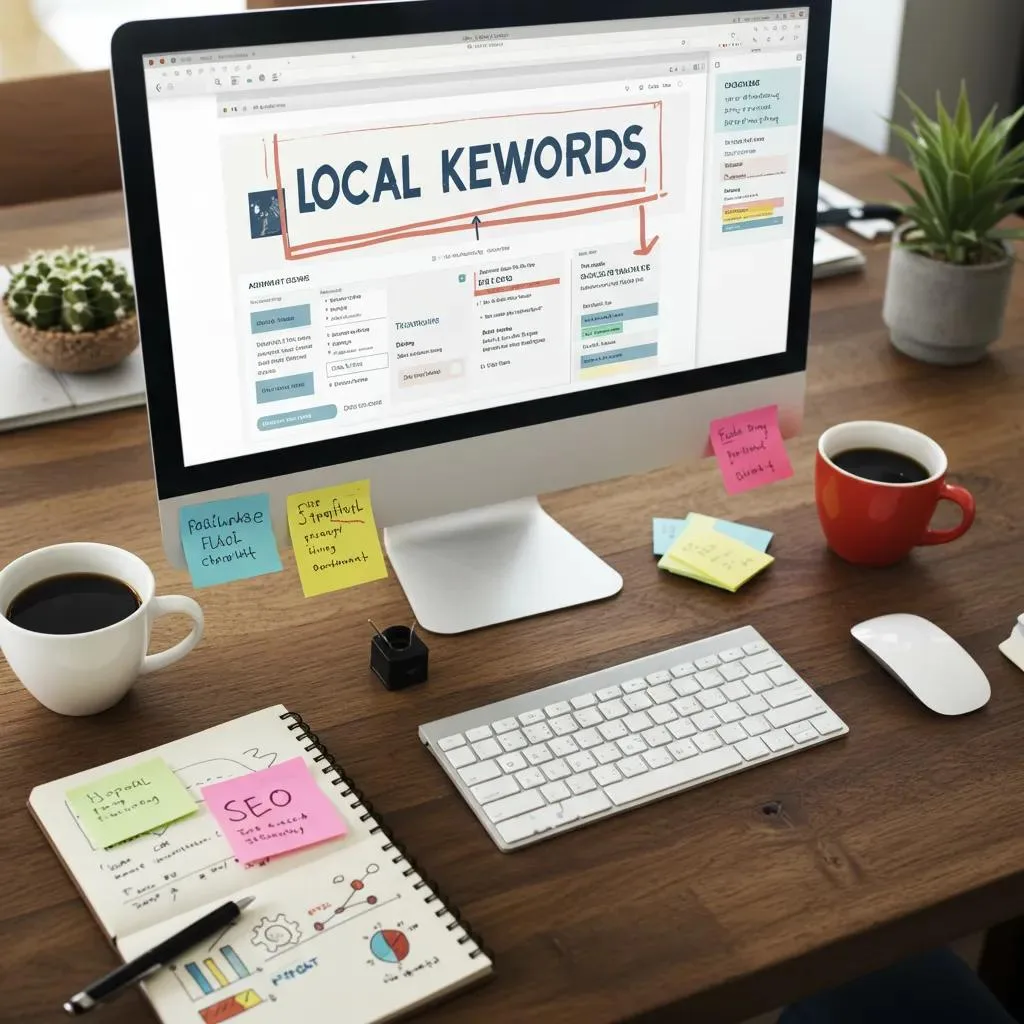
Local keywords and on-page SEO connect your Google Business Profile to your website content by reinforcing semantic relevance and providing landing pages that satisfy searcher intent. Placing city and service phrases in title tags, H1s, meta descriptions, and local landing pages helps Google associate your site with local queries and encourages higher click-through rates from map listings. Schema.org LocalBusiness markup and structured NAP data further signal to crawlers the relationship between web content and your GMB entry. A coordinated profile+site approach multiplies relevance signals and reduces mixed signals that can hurt local rankings.
These on-page optimizations lead directly into tactical profile optimizations you can implement right away.
How Can You Optimize Your Google Business Profile to Climb Local Search Rankings?
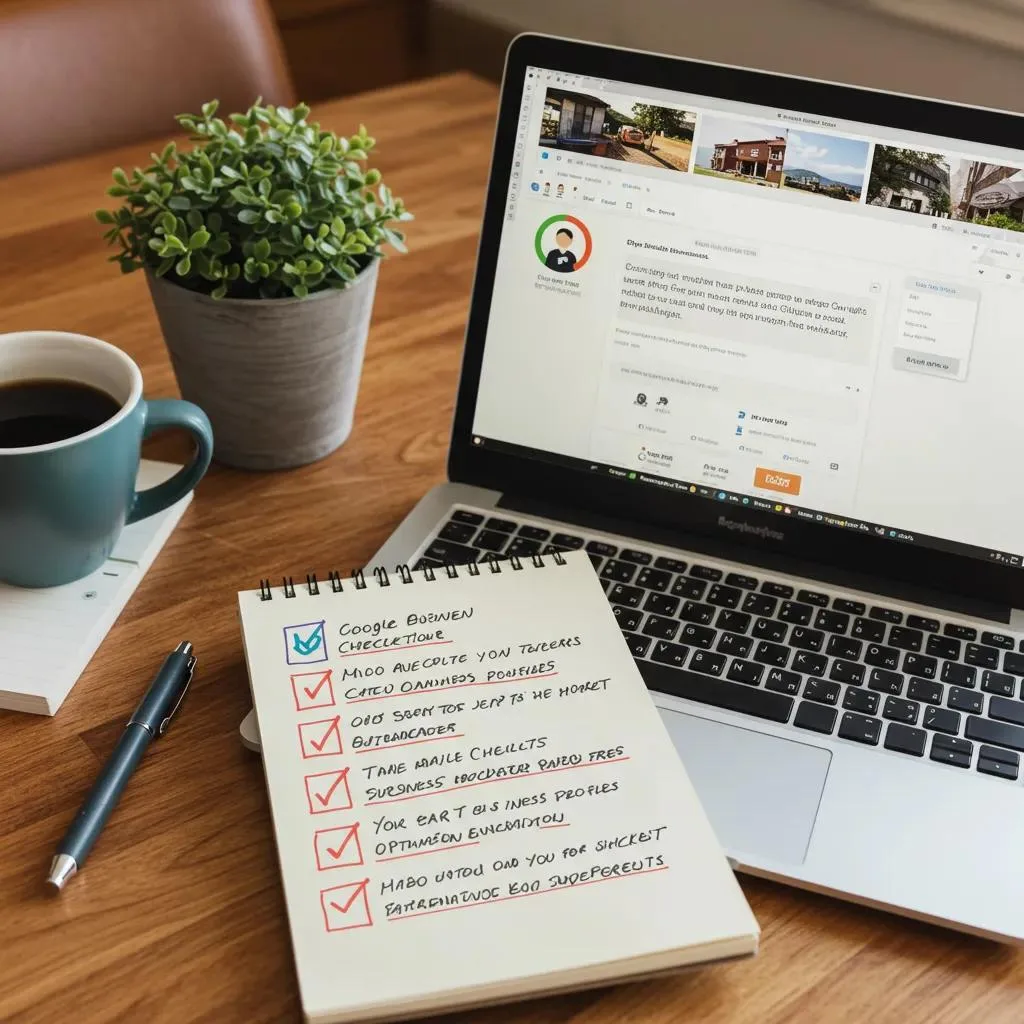
Optimizing your Google Business Profile requires a tactical checklist: choose precise categories, keep NAP consistent everywhere, add services and attributes, upload high-quality media, publish regular posts, and implement LocalBusiness schema on your site. Each step improves a specific ranking dimension: categories and attributes increase relevance, reviews and photos increase engagement, and schema + landing pages increase semantic linkage. Below is a short action sequence to target featured snippets and immediate uplift.
- Verify and complete every GMB field with accurate NAP and a clear primary category.
- Add detailed services/products and choose attributes relevant to 2025 filters.
- Upload 10+ high-quality images and at least one short video; optimize filenames and captions with local keywords.
- Publish weekly posts with localized offers or FAQs to increase panel activity.
- Ensure landing pages have LocalBusiness schema and local keyword-optimized title/meta tags.
This numbered roadmap gives implementable steps; the following table links actions to expected outcomes to guide resource allocation.
| GMB Element | Best Practice | Expected Outcome |
|---|---|---|
| Categories | Select one precise primary + 2–3 complementary secondary | Better query matching and higher relevance |
| Photos/Videos | Upload 10+ images, one short video, use descriptive filenames | Increased CTR and longer map-panel interaction |
| Services/Attributes | Populate all relevant attributes and services with clear descriptions | Greater visibility in filtered local searches |
Use this action-to-outcome mapping to plan changes that align with your capacity and local priorities. The next subsection explains category and NAP selection specifics.
What Are Best Practices for Selecting GMB Categories and Maintaining NAP Consistency?
Select a primary category that exactly reflects your core service and add secondary categories for adjacent offerings; avoid generic or misleading categories that dilute relevance. For NAP consistency, audit the top directories (local directories, industry listings, and major data aggregators) and normalize formatting (abbreviations, suite numbers) to match your verified profile. Record canonical NAP formatting in a single source-of-truth document and use citation management tools or manual updates to correct discrepancies. Ensuring consistent NAP across sources reduces data conflicts that can suppress local visibility.
Having categories and NAP aligned makes media and posts more effective, which is explored in the next subsection.
How Do GMB Photos, Videos, and Posts Enhance User Engagement?
High-quality photos and short videos increase click-through rates from the local panel and raise time-on-panel, which are behavioral signals that correlate with improved local rankings. Upload a mix of exterior, interior, staff, and service images, using descriptive filenames and captions with local keywords; post cadence of 1–2 posts per week keeps the profile active. Image alt-text and structured file naming help Google understand media context, while timely posts drive re-engagement from searchers. Visual content thus supports both human decision-making and algorithmic engagement metrics.
Which GMB Attributes Should You Use to Boost Local Visibility in 2025?
Prioritize attributes that match how customers search and filter in 2025, such as appointment availability, service options (onsite/online), accessibility features, and ownership identifiers that local searchers use. Industry-specific attributes (e.g., specialties or accepted payment types) can surface in filtered searches, so fill all applicable toggles and add clarifying details in service descriptions. Attributes also provide microdata signals that complement categories and services, enhancing semantic matching. Filling attributes comprehensively broadens the number of queries where your profile is considered relevant.
If you prefer hands-off optimization, the next paragraph explains a free audit option to drive more organic traffic to site.
For businesses that want external support, Whidbey Digital Marketing, a local Oak Harbor digital marketing agency, offers a Free Google Business Profile Audit designed to identify quick wins and a prioritized digital roadmap to get more organic traffic to site. This short engagement identifies low-effort, high-impact fixes and maps them to measurable KPIs so you can decide whether to implement internally or with help.
How Do Online Reviews Affect Your Local SEO and What Are the Best Ways to Manage Them?
Reviews affect local SEO by shaping both algorithmic signals (quantity, recency, rating) and user behavior (CTR, conversion). Positive reviews increase click likelihood and reduce friction for conversions, while steady inflow of recent reviews signals active engagement to ranking systems. Managing reviews requires ethical request flows, timely responses, and monitoring for authenticity issues that can damage trust. The list below outlines review management tactics that both increase volume and preserve compliance.
- Implement timing-based review asks (post-service emails or SMS triggers).
- Provide simple feedback links on receipts and invoices to increase response rate.
- Train staff on in-person review requests that respect policy and avoid leading language.
These tactics boost review velocity and create content-rich signals that influence semantic matching. Below are specific strategies to earn more reviews.
What Strategies Help Earn More Positive Google Reviews?
Earning more reviews starts with identifying natural trigger moments—after a successful delivery, a resolved support ticket, or a completed service—and asking once with a simple, honest request. Use transactional touchpoints like receipts, follow-up emails, and in-person prompts, and make the process frictionless by explaining the value of a few sentences about the service. Ensure compliance with Google’s policies: never offer incentives, avoid scripted or leading language, and always allow customers to opt out. Ethical review generation increases quality and reduces risk of penalties.
How Should You Respond to Reviews to Maximize SEO Benefits?
Responding to reviews promptly and with specific details improves perceived responsiveness and can lift conversion rates from the local panel. For positive reviews, thank the reviewer and mention a relevant service or team to reinforce keywords naturally. For negative reviews, acknowledge the issue, offer a corrective action offline, and invite resolution—keeping the tone professional and concise. Timely, specific replies act as additional content on the profile and help searchers while signaling engagement to the platform.
Can Keywords in Reviews Improve Your Local Search Ranking?
User-generated mentions of services and locations can help semantic matching because natural descriptions in reviews contribute to topical signals that algorithms use for relevance. However, you cannot solicit keyword-stuffed reviews; instead, encourage descriptive feedback with open prompts like “What did you like about the service?” that lead customers to naturally mention specifics. Avoid directing language that asks for particular phrases to remain compliant and authentic. Well-worded, descriptive reviews thus support semantic relevance without violating policy.
What Role Do Local Authority and Backlinks Play in Local SEO Ranking Factors?
Local authority and backlinks provide prominence signals that complement profile relevance and proximity; high-quality local links and consistent citations indicate trust and influence a business’s ability to rank in competitive local packs. Backlinks from local news sites, chambers, and sponsorship pages transfer topical authority tied to the locality. Citation cleanup reduces noise and increases the probability that Google correctly attributes prominence to your profile. The checklist below outlines practical local link-building and citation hygiene steps.
- Sponsor local events or partner with community organizations to earn local links.
- Create local resource content that nearby sites will reference or link to.
- Audit and correct top directory listings for NAP consistency using a canonical source-of-truth.
These tactics build measurable local authority that works with other ranking signals to improve visibility. The next subsection provides concrete link-building tactics.
How Can Local Link Building Improve Your Google Business Profile Ranking?
Local link building strengthens prominence by increasing the number of authoritative local references Google can associate with your business, which supports higher placement when relevance and proximity are comparable. Practical tactics include sponsoring community events, contributing guest content to local publications, and building partnerships with adjacent local businesses for mutual referrals. Each tactic should be tracked by referral traffic and changes in local visibility to evaluate impact. Measured local link growth combined with on-profile optimizations yields sustainable improvements.
Research has substantiated the importance of local optimization for retailers to increase organic traffic and has provided practical recommendations for businesses to improve their placement in the Local Pack.
Local SEO Optimization for Google Business Profile Success
The Purpose of the presented research is to substantiate the importance of the local optimization of the retailer’s business for search engines to increase organic traffic; to represent insights and give practical recommendations for retailers regarding local optimization of their business in Google as part of an effective marketing strategy; to create the typical valid data micromarking (by the example of the Ukrainian retailer), which will contribute to an advantageous placement in the Local Pack in comparison with competitors, and increase organic traffic and conversion.
Business optimization in the digital age: Insights and recommendations, A Natorina, 2020
Why Is Citation Consistency Important Across Online Directories?
Citation consistency matters because conflicting NAP data across directories can fragment signals and reduce a business’s perceived trustworthiness to indexing systems and aggregator databases. Conduct a citation audit that lists top directories, verifies canonical formatting, corrects mismatches, and documents updates. Common sources of inconsistency include abbreviations, suite number formats, and old phone numbers; fix these systematically and use tools or manual tracking to prevent regressions. A clean citation footprint increases the reliability of prominence signals used in local ranking.
How Do Proximity and User Behavior Signals Influence Local Search Rankings?
Proximity determines whether a business appears for strictly local queries because distance is a primary factor in local pack selection, but it interacts with relevance and prominence so a highly relevant and prominent business can outrank a closer but less relevant competitor. User behavior signals such as click-through rate, calls from the panel, and dwell time on landing pages provide real-world engagement feedback that algorithms can use to adjust rankings. Small tests on snippet text, images, and landing pages can move CTR and dwell metrics enough to influence local placement. The suggestions below outline practical experiments to enhance behavioral metrics.
- Test localized title/meta variations to improve SERP CTR.
- Experiment with image choices and captions on your profile to lift panel clicks.
- Use focused landing pages with clear local signals to increase dwell time after click.
Running controlled experiments and tracking their effects on local visibility ties behavioral optimization directly to ranking outcomes. The next subsection clarifies proximity’s mechanics.
What Is the Impact of Proximity on Google Local Pack Rankings?
Proximity affects which businesses are eligible to appear in the Local Pack and often serves as a primary filter before relevance and prominence are applied; for queries with a strong local intent, distance can override other factors. When proximity is limiting, service-area optimizations, clear service descriptions, and targeted landing pages for nearby neighborhoods can help broaden visibility. For mobile-heavy searchers, optimizing for “near me” intent with clear address and service radius information helps match searcher expectations. Understanding proximity’s limits allows you to design workarounds that maximize relevance within your service area.
How Can You Optimize Click-Through Rate and Dwell Time for Better Local SEO?
Improving CTR and dwell time starts with crafting compelling profile snippets and matching landing page content to the searcher’s intent; use local keywords, benefit-focused descriptors, and clear calls-to-action. On landing pages, include localized headings, fast-loading images, and content that answers common local questions to reduce bounce and increase session length. Track performance through analytics and iterate on title/meta tests and image swaps to measure lift. Small, data-driven changes to snippets and pages often yield measurable improvements in behavioral signals that support local ranking.
Implementation Checklist to act now:
- Verify and standardize NAP across top directories.
- Choose one precise primary category and add 2–3 secondary categories.
- Upload 10+ images and one short video; optimize captions with local keywords.
- Implement LocalBusiness schema on targeted landing pages.
- Launch a compliant review-ask workflow and respond to reviews within 48–72 hours.
For a hands-off option, Whidbey Digital Marketing in Oak Harbor provides a Free Google Business Profile Audit and a prioritized digital roadmap to help businesses get more organic traffic to site. Their audit identifies immediate profile fixes, local content gaps, and citation inconsistencies so you can implement changes or request managed support.